

Breast developmental anomalies
General information
„Correction of breasts deformed due to a developmental defect”
It is not surprising that plastic breast surgeries constitute the main area of work for plastic surgery specialists. The female breast is an element of sexuality, a signal of fertility, health, and youth. Based on the latest research, it is known that breasts are never perfectly symmetrical. In most women, this asymmetry is so slight that it is invisible at first glance. Only with a thorough examination of the breasts and the use of three-dimensional imaging methods can one of the features of asymmetry be identified. Asymmetry can concern the size of the breast mounds, the amount and tension of the skin, the level at which the nipple-areola complex is located, the size of the nipple-areola complex, and the level at which the inframammary fold is situated. It turns out that even the bony chest wall can be asymmetrical on the right and left sides. Each of the features defining breast asymmetry requires a different surgical approach. It is most important for the doctor to thoroughly examine the breasts and evaluate in centimeters all features indicating asymmetry. In most cases, the differences are so minimal that it is not worth correcting them, but it is always worth paying attention to them.
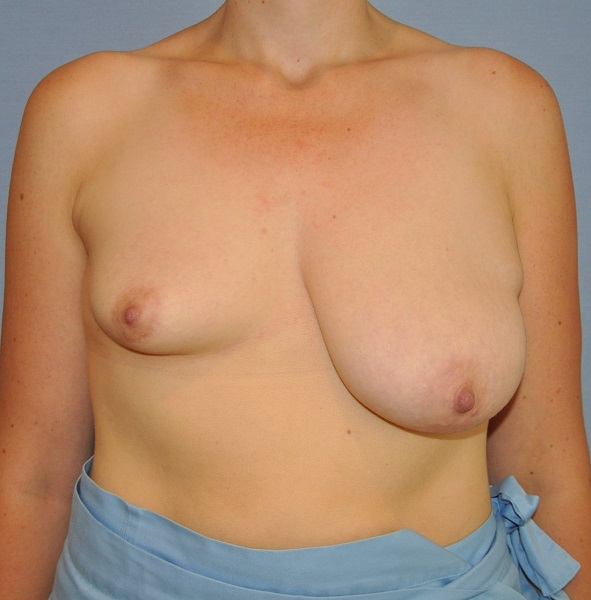
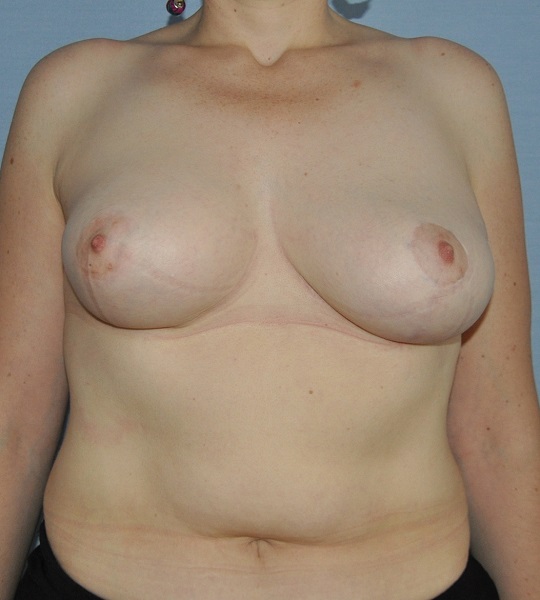
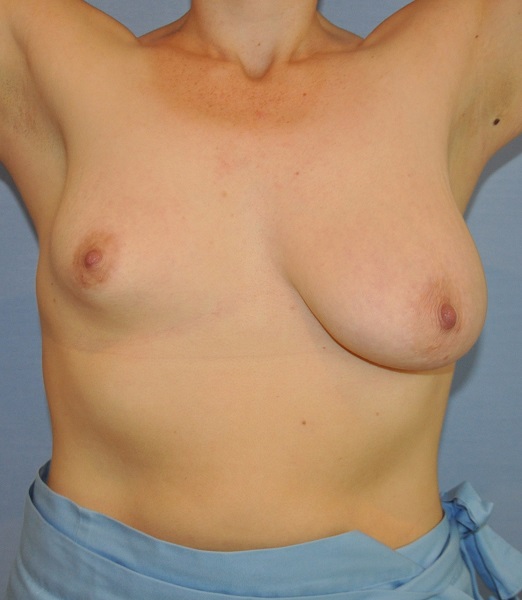
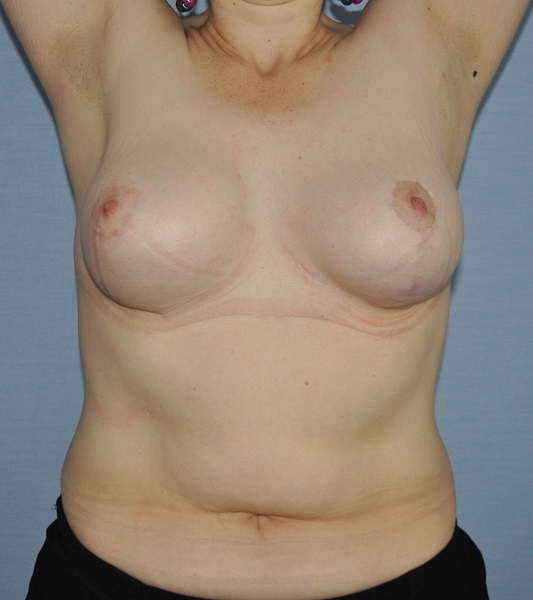
Some women have developmental breast defects that cause significant deformation. The breasts then significantly deviate from generally accepted aesthetic norms. Women with developmental breast defects are often patients of plastic surgery clinics. Correction of breasts deformed due to a developmental defect poses a challenge for a plastic surgery specialist, as each case requires an individual approach. Routinely performed operations are not enough to correct breasts deformed due to a developmental defect. In these cases, it is necessary to perform several types of operations simultaneously. Often, a different procedure is performed on the right breast than on the left.
The most common developmental defects of female breasts are: 1. Poland syndrome and 2. Tuberous breast.
In 1841, a London medical student, Alfred Poland, during a dissection of a young woman's cadaver, noted unusual findings concerning one side of the chest and the entire upper limb. The entire left side of the chest was underdeveloped. The chest muscles were underdeveloped or absent, the left upper limb was shorter, and the fingers were fused. The defect can occur with varying degrees of severity. The current condition for diagnosing Poland syndrome is only the absence of the lower part of the pectoralis major muscle (the breast rests on this muscle). The defect affects men more often than women, but women more frequently seek a plastic surgeon for this problem, as this defect leads to significant breast asymmetry. On the side of the defect, the breast is underdeveloped. Men affected by Poland syndrome have chest asymmetry. This asymmetry can be corrected with specially designed implants that mimic the pectoralis major muscle. In women, breast mound reconstruction is most often performed using a silicone breast implant (see: breast implants). To achieve optimal symmetry, an additional procedure on the healthy breast is often required. In cases of more severe deformities involving all muscles and the bony chest wall, tissue transfer from distant body areas to the defect site is required. Most often, a pedicled latissimus dorsi flap is used for this purpose. Such operations involving tissue transfer from distant body areas should already be performed in university plastic surgery clinics.
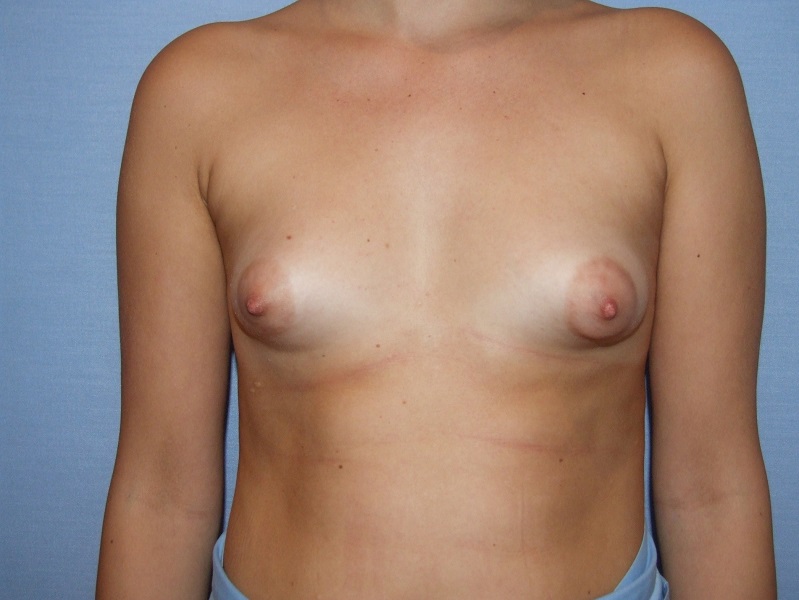
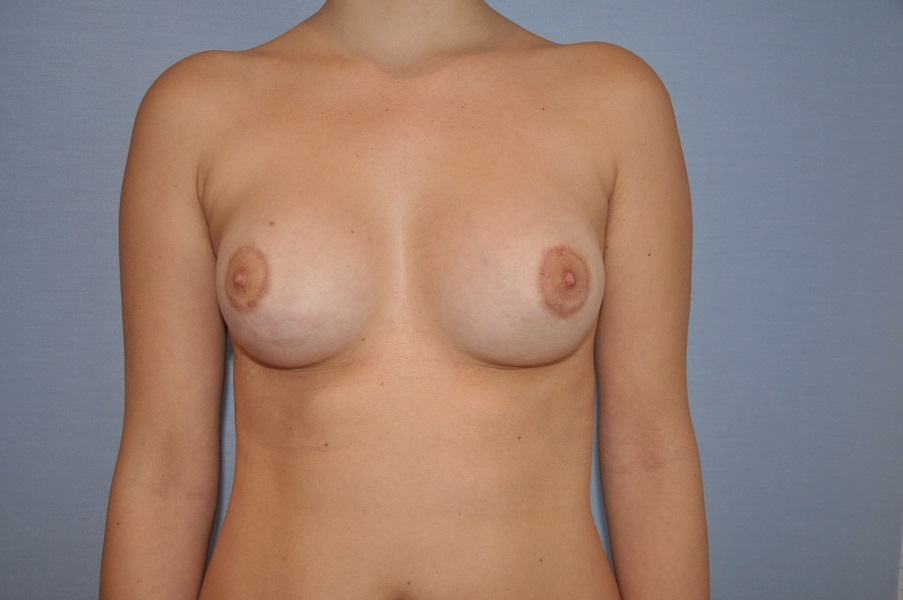
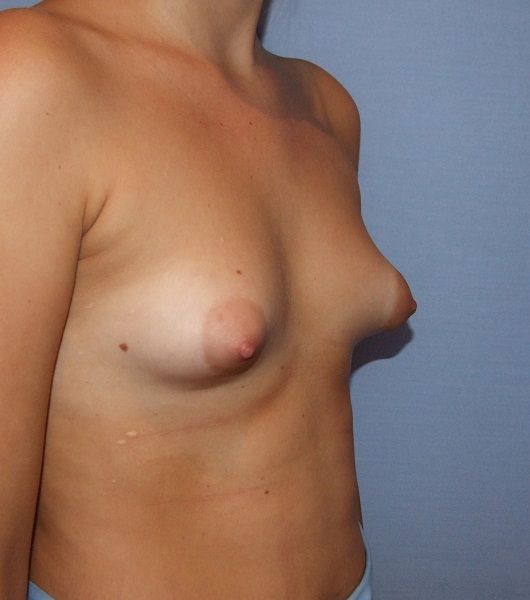
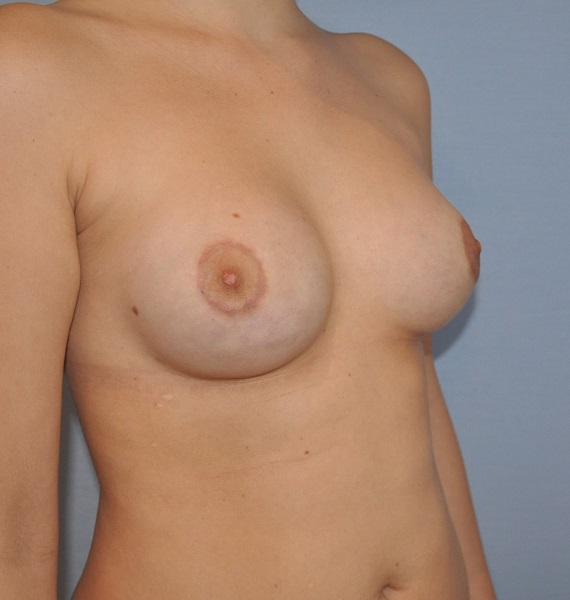
The breast deformity called „tuberous breast” was first described in 1976, and the name given to this deformity comes from the shape of the described breasts, which resembled a tuber root. The cause of this defect is unknown, but it is known that the development of the mammary gland during puberty is restricted in lateral directions. Unrestricted breast development in the anterior direction leads to a characteristic deformity in which the breast has a narrow base and a large, stretched nipple-areola complex. Tuberous breasts can vary in size. In one-third of cases, there is breast hypertrophy, in one-third, breasts have normal volume, and in one-third, they are underdeveloped. In 100% they are more or less asymmetrical. Different degrees of the defect can be distinguished. In the least severe, Grade I, only the lower medial breast quadrant is underdeveloped. In Grade II, both lower quadrants are underdeveloped, and in Grade III, all four breast quadrants are underdeveloped. Depending on the breast size and the severity of the defect, the type of operation is chosen. In some cases, breast reduction mammoplasty is necessary, in others only mammoplasty (see: mammoplasty), and most often, simultaneous mammoplasty with the insertion of silicone implants is performed (see: breast implants). Additionally, it is always necessary to reshape the mammary gland and incise the fibrous ring that previously restricted breast development. In some cases, developmental defects and breast asymmetries can be corrected with fat grafting (see: fat grafting to the breasts).
In common public perception, plastic breast surgeries are associated only with breast augmentation using silicone implants to achieve larger breast mounds. Reality deviates significantly from such an image. Women who consult a plastic surgeon often expect a proportional, subtle breast augmentation for breasts that have lost their appearance after childbirth and breastfeeding. Many of these women have significant breast asymmetry, which requires the insertion of two different implants into the right and left breasts. Other additional procedures to correct asymmetry are often required, including mammoplasty, and even reduction mammoplasty. A significant group also consists of women with developmental breast defects such as Poland syndrome or tuberous breasts, where the treatment plan in each case is individual and unique. Every woman has some degree of breast asymmetry. Plastic surgery can never achieve perfect symmetry. Given the above facts, it is worth seeking a consultation regarding breast correction with a plastic surgery specialist who possesses appropriate knowledge and experience in plastic breast operations.
Photo gallery