


Facial fat grafting
General information
Type of anesthesia
local (rarely) or general (usually);
Procedure duration
about 60 min;
Stay in clinic
a few hours after the procedure you can leave the clinic
Recovery period:
- Swelling and bruising usually last no longer than 14-21 days;
- Return to mental work and driving after 1 day.
- Return to physical work after 3 days;
- Engaging in sports after 3 days;
- The fat donor site is tender, swollen, and may show bruising for several days. Very rarely, and in very thin individuals, fat loss at the donor site (a depression in the skin) may be visible.
Follow-up examinations:
- after one week – local condition check.
- After 3 months, the final result of the procedure.
Medications:
- Over-the-counter painkillers (patients usually do not complain of pain);
- For lips, it is recommended to use a lip balm with vitamin E;
- For bruising, arnica ointments can be used;
Duration of the effect
is very individual. Only a portion of the fat remains permanently at the injection site (this is no more than 30% of the injected fat).
Unavoidable consequences:
- discomfort/ pain,
- swelling,
- bruising;
- Część tłuszczu z założenia wgaja się na zawsze. Powtarzanie zabiegu wielokrotne może spowodować, że po latach przy wzroście masy ciała twarz może nienaturalnie przytyć.
Complications
- overcorrection (after some time, the excess fat will be absorbed);
- insufficient correction (may require another procedure);
- palpable lumps under the skin (usually resolve after massage);
- krwiak, infekcja – wyjątkowo rzadko jak przy każdym zastrzyku;
- uszkodzenie struktur anatomicznych w okolicy zabiegu – wyjątkowo rzadko.
Photo gallery

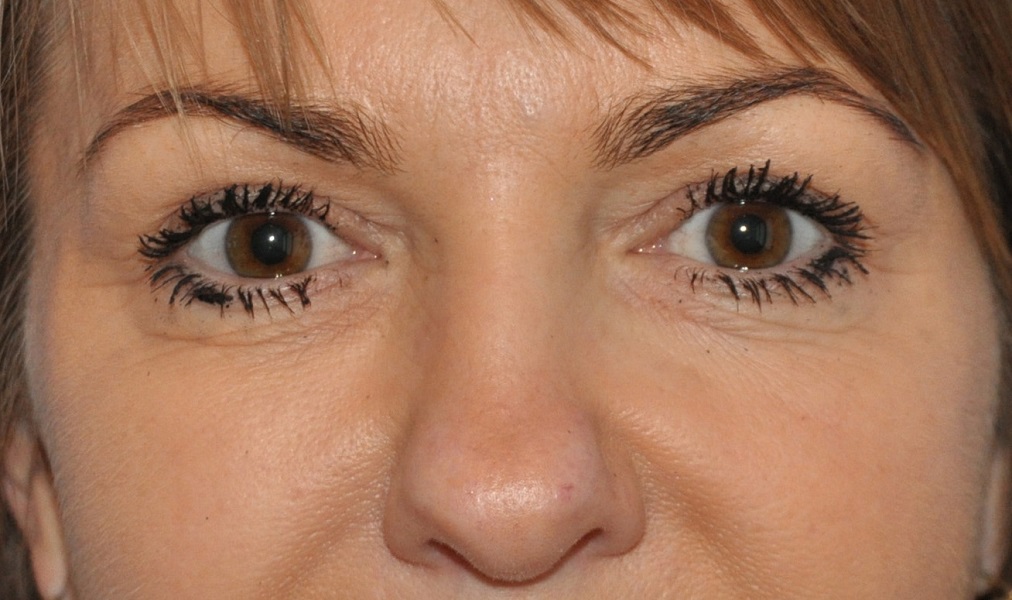
Detailed information
Aspirational Fat Grafting in the Practice of a Plastic Surgeon
The emblem of plastic surgery is Plate VIII from the work of the Italian surgeon and anatomist Gaspare Tagliacozzi, titled: "De Curtorum Chirurgia per Insitionem" (1). In English, the title of this work translates to: "The Surgery of Defects by Implantations." This plate illustrates a method of nose reconstruction using a tissue flap (graft) from the arm. The book was published in Venice in 1597, and even then, the author used the word "graft." This work is considered a breakthrough in modern plastic surgery. Plastic surgery continues to deal with the treatment of deformities in various areas of the human body and the removal of external signs of aging. The main tool in achieving these complex goals remains tissue transplantation. A graft is a tissue or organ that is deprived of its blood supply (nutrition) at the donor site and transferred to a recipient site, where it acquires a new blood supply. The most commonly used graft in aesthetic plastic surgery is the aspirational autologous fat graft, which acts as a "filler," though the procedure itself has a much broader impact on tissues than merely providing volume.
It is currently known that there is no single matrix for facial aging, and consequently, there is no uniform scheme for its rejuvenation. This results from the diversity of human faces, the varying individual rates of aging among different people, and furthermore, the different rates of aging of various anatomical areas and layers of the face in a specific individual. Although there is no single pattern of facial aging, certain common features concerning the aging of every face can be observed. The basic structural changes underlying morphological changes are: 1. tissue atrophy (loss of bone volume, fat tissue, skin itself), 2. laxity and sagging of tissues, 3. changes on the skin surface (fine wrinkles, discoloration), 4. change in mimetic muscle tone (increased tension). Every structural change occurring requires a distinct and individual approach. There is no single key that opens all locks, nor is there one method of treatment applicable to all structural changes of an aging face. Fat grafting constitutes a good method for restoring lost volume – addressing tissue atrophy. A holistic approach involves combining fat grafting with tissue lifting and tightening procedures (facelift), altering muscle tension (botulinum toxin), and affecting the skin surface (lasers, peels).
Definitions. Structural fat graft: is a graft of a surgically harvested fragment of adipose tissue. Aspirational fat graft: is a graft of fat harvested via liposuction. Structural fat grafting was described as early as 1893 by Dr. Neuber (a case of fat grafting into a facial defect caused by tuberculosis). Aspirational fat grafting was first described in 1983 by Dr. Illouz – one of the creators of liposuction. A byproduct of liposuction – fat harvested from the patient – was injected into various body areas to provide volume. Considering these historical facts, it cannot be stated that the idea of fat grafting is a novelty. However, over the last quarter-century, many scientific studies have been conducted, contributing significant new knowledge about this procedure. It appears that Dr. Coleman – a New York dermatologist – has made the greatest contribution to systematizing and disseminating this knowledge.
Indications for the use of fat grafting in plastic surgery involve the necessity to provide "volume". Most often, the procedure is performed on the face to fill deficits in the area of the cheeks (2), temples, nasolabial folds, marionette lines, lips, eyelids (3), nose, and forehead (9). Fat grafting can serve to correct breasts (4), calves (6), and buttocks. In the case of breasts, the procedure could be performed more frequently, but the main barrier is the anatomical structure of potential candidates – women with small breasts are usually slender and lack areas from which a sufficient amount of adipose tissue could be harvested. The procedure is helpful in correcting scarred deformities with tissue loss (5). Fat grafting has a beneficial effect on skin quality and has an anti-inflammatory effect – this latter action can be utilized in cases of treating acne-prone skin.
The ideal filler material should be safe, reasonably durable, and simple to apply. The concept of safety includes: 1. Biological compatibility; 2. Lack of antigenic properties (an antigen triggers an immune response in the body); 3. The material cannot be pyrogenic (cannot induce fever); 4. The material cannot induce inflammation; 5. It cannot be toxic (cannot damage surrounding cells and tissues); 6. It should not be of animal origin; 7. It should be stable after administration; 8. It should not migrate (move) from the site of administration; 9. It should be reasonably durable, but absorbable (permanent fillers are being moved away from); 10. It should look natural.
Aspirational autologous fat grafting meets all the above conditions and is thus the gold standard among broadly defined "fillers". The patient brings the material with them – there is no cost for the preparation. A large amount of adipose tissue can be administered at one time (often 50 cc in the face, even up to 300-400 cc per side in the breasts). The procedure leaves no external scars. With a correctly performed procedure, complications are practically unobserved. A portion of the administered adipose tissue takes, acquires vascularization in the new location, and provides a lasting result (there are no reliable scientific studies regarding the percentage assessment of fat graft survival). Transplanted fat cells in the recipient site behave the same way as they did in the donor site – in the event of weight loss, the volume of transplanted cells decreases, and during weight gain, it increases. Along with adipose tissue, stem cells are transplanted, which are significantly responsible for the result of the procedure.
Stem cells are those cells that have the ability to proliferate (divide, self-renew) and, at the same time, one of the cells resulting from division has the ability to differentiate into various cell lines, while the other remains a stem cell. Based on origin, stem cells are divided into: 1. Embryonic stem cells – can differentiate into any adult cell line and 2. Somatic stem cells (adult stem cells) – can differentiate into many, but not all cell lines. The best example of an embryonic stem cell is a fertilized egg cell – the entire human organism arises from a single cell. The application of embryonic stem cells in medicine encounters many ethical and political barriers. In plastic surgery and aesthetic medicine, somatic stem cells find application, among which are mesenchymal stem cells isolated from bone marrow, the umbilical cord, and adipose tissue. Apart from embryonic and mesenchymal stem cells, so-called tissue-specific "resident" stem cells have also been identified. These cells are capable of proliferation and differentiation towards the tissue in which they reside. They maintain this ability throughout the human lifespan. They sustain the constant cellular state of the tissue/ organ and form the basis for regeneration in case of injury. An example of these cells are skin stem cells, found in the basal layer of the epidermis, hair follicles, and sebaceous glands.
Mesenchymal stem cells derived from adipose tissue have many advantages – they are numerous and easily accessible via liposuction. Stem cells can be isolated from harvested adipose tissue through centrifugation – they are heavier than adipocytes and, as a result of centrifugal force, settle at the bottom of the tube. Cells obtained in this way can differentiate into adipocytes (fat cells), chondrocytes (cartilage tissue cells), osteocytes (bone tissue cells), and myocytes (muscle tissue cells). In plastic surgery, stem cells obtained in the above manner are injected into the desired site along with adipose tissue. In principle, this aims to improve the results of fat grafting, namely increasing the percentage of healed-in fat cells. There are currently no reliable scientific studies confirming the efficacy of such a procedure. Is isolating stem cells to enrich adipose tissue with them justified at all? To obtain a pool of stem cells, we must sacrifice a portion of the harvested adipose tissue. I believe it is better to administer all harvested adipose tissue along with the stem cells than to isolate stem cells, resulting in the loss of a portion of the harvested fat. This is particularly important in the case of breast fat grafting, where there is almost always a lack of donor sites, so the loss of a portion of harvested tissue to obtain stem cells, which could have been administered anyway, is pointless. In the case of facial fat grafting, enriching fat with stem cells may constitute one of the options.
The procedure technique consists of three stages: 1. Harvesting of adipose tissue, 2. Its processing and 3. Administration of the prepared material into the desired location. The necessary instrumentation to perform the procedure is simple, consisting of a cannula for infiltrating the donor site, a cannula for harvesting fat, and a cannula for administration. Usually, cannulas are reusable, although disposable cannulas are now available, and this is likely the direction of development (8). During all activities, it must be remembered that fat cells are sensitive to all forms of trauma and can disintegrate at any stage of the procedure.
Fat harvesting via liposuction must be done very gently – infiltration of the donor site should be subtle, with a small amount of fluid, so as not to generate high pressure that destroys fat cells. The infiltration fluid during a procedure under local anesthesia must contain a local anesthetic, but it is important that it is not in high concentrations. During a procedure under general anesthesia, the infiltration fluid should be devoid of local anesthetics, as they are toxic to fat cells. The mechanical suction of adipose tissue itself should take place at low negative pressure values (using 10 ml syringes for small facial grafts, 20 ml for large ones). The surgeon's hand movements must be relatively slow to avoid mechanical trauma to the fat cells. The harvested aspirate contains from 10% to 90% living fat cells. Adherence to the above rules serves to harvest material containing a significant amount of living cells. One should harvest 30-40% more content than the predicted volume of adipose tissue intended for injection. The aspirate will also contain infiltration fluid and disintegrated fat cells in the form of "oil". It is necessary to administer three times more processed adipose tissue than the volume necessary to achieve correction – 2/3 of the administered material will be absorbed (and possibly even more).
The aspirate processing process should be as short as possible. Most fat cells die after 1 hour outside the body. The goal of processing is to separate the harvested material into an oil layer (fat from disintegrated cells), a layer of adipose tissue with stem cells, and a fluid layer (mostly infiltration fluid). Centrifugation of the aspirate causes the oil and fluid layers to be wider, and the adipose tissue layer narrower. Self-sedimentation also causes separation, but the thickness of the layers is different – the oil and fluid layers are narrower, and the adipose tissue layer wider. Stem cells are smaller and heavier than fat cells, which is why during the separation process they migrate to the bottom of the tube – during centrifugation, when centrifugal forces are high, most stem cells end up in the fluid at the bottom of the tube, whereas during self-sedimentation, most stem cells remain in the adipose tissue layer. The choice of processing method is arbitrary, and there is no scientific evidence for the superiority of any of them.
After processing the material, we discard the fluid and oil layers and inject only the adipose tissue. The lower layer of adipose tissue is richer in stem cells, while the upper layer is poorer. The desired area should be corrected symmetrically, so as to administer the same amount of stem-cell-rich and stem-cell-poor adipose tissue on each side. Symmetrization of the procedure also involves ensuring that the material administered on each side has spent the same amount of time outside the human body. These two simple and obvious measures will help prevent asymmetric fat absorption. On the face, adipose tissue is administered using one-milliliter syringes, and for body contouring, three-milliliter syringes. For every milliliter of adipose tissue administered, 30-50 passages with the cannula should be performed in various directions. The syringe plunger is pressed while withdrawing the cannula. In the case of administering 50 ml of adipose tissue into the face, a minimum of 1500 cannula passages (30×50=1500) must be performed in practically all layers of the face – in the superficial and deep fat layers and in the SMAS layer (Superficial Musculo-Aponeurotic System). Deep mechanical "mesotherapy" of facial tissues performed in this way, leaving adipose tissue and stem cells within them, is the basis for achieving the volume restoration effect. Recently, the concept of "nano fat graft" has been introduced – the procedure involves special preparation of adipose tissue so that it can be administered intradermally with a needle. This is mesotherapy with a fat emulsion containing stem cells. The procedure improves skin quality and, apart from the face, can be used on the neck and décolletage.
Every procedure is associated with unavoidable sequelae and the risk of complications. This applies to both the site from which fat is harvested and the site where it is administered. Unavoidable sequelae always occur and constitute an inseparable part of fat grafting. Complications occur rarely, but they must be taken into account. Inevitable sequelae include: 1. Swelling, 2. Bruising, 3. Discomfort/ generally understood suffering during and after the procedure. Swelling and bruising on the face are the reasons for a long recovery period – significant swelling and bruising can persist for even 2-3 weeks. Complications after the procedure are mainly subjective in nature: "too little effect" and even more rarely "too much effect". Palpable, and sometimes visible, lumps may occur at the injection site, which disappear spontaneously with the process of adipose tissue absorption and maturation of the internal scar. In places where the layer of own tissues is thin and delicate, there are cases where such lumps remain permanently visible – most often this is the tear trough area (7). Post-operative asymmetry results from asymmetric administration or asymmetric absorption of the administered adipose tissue. A hematoma (a collection of blood requiring puncture or another form of drainage) or a collection of serous fluid (seroma) may occur in the tissues. Infection happens extremely rarely. Late infections with Corynebacterium have been described after fat grafting – symptoms appeared late, several weeks or even months after the procedure, and consisted of the appearance of scaly-weeping skin lesions. Standard cultures were sterile, which prolonged diagnosis and implementation of effective treatment. Analysis of these cases led to the conclusion that the cause of this type of infection was insufficiently mechanically washed reusable cannulas (cannulas are thin and require thorough mechanical cleaning, also internally, before being subjected to the sterilization process; otherwise, the sterilization process is not fully effective). One must remember the possibility of such an infection, and when the aforementioned symptoms appear, refer patients for specialized bacteriological tests that will help in making a diagnosis. In the case of obtaining cultures with an antibiogram, treatment consists of targeted antibiotic therapy. Every procedure violating skin continuity is potentially associated with the possibility of damaging anatomical structures in the area of operation (muscles, vessels, nerves, salivary glands, the eyeball). Cases of blindness have been described after facial fat grafting, similar to procedures using hyaluronic acid or other types of injectable preparations. Fortunately, no such reports have been recorded in Poland.
Qualification for fat grafting takes place during a personal consultation with the doctor. Facial fat grafting can be performed under local anesthesia, especially when it concerns only one area of the face, e.g., lips. In the case of a full-face procedure, general anesthesia is indicated to ensure patient comfort. In the case of breast correction, general anesthesia is essential. Patients for the procedure should be in generally good health, which should be confirmed by test results. After a procedure under general anesthesia, staying in the clinic for a minimum of 6 h. Follow-up examination is after one week to assess healing processes and potentially detect complications early, and after 3 months for the final assessment of the procedure result. During this time, swelling completely subsides, and the fat that has not taken is absorbed.
Aspirational fat grafting, like any procedure, has its pros and cons. Among the advantages are: 1. Autologous fat enriched with stem cells is an ideal filler; 2. The procedure has broad indications; 3. The procedure is not complicated and has a short learning curve for a plastic surgery specialist. Among the disadvantages are: 1. A long recovery period for facial fat grafting; 2. The outcome of the procedure depends on many variables and is therefore not fully predictable; 3. The fat grafting procedure should be performed in an operating room by a physician with a surgical specialty.