


Plastic surgery
General information
Anesthesia
general (anesthesia)
Duration
approx. 4 h
Stay in clinic
1 day
Recovery period
- Return to mental work and driving after approx. 1-2 weeks.
- Return to physical work (without exposing breasts to injury) after about 1 month.
- Return to light physical exertion after 1 month.
- Return to strenuous physical activity (e.g., horse riding) after 3 months.
- Wearing special underwear (sports bra) for 3 months non-stop.
Post-operative check-ups
- The day after the procedure – local condition check, drain removal if inserted, discharge home.
- after 1 week (necessary) – local condition check, partial suture removal.
- after 2 weeks (necessary) – local condition check, removal of remaining sutures.
- After approx. 1 month from suture removal (optional) (scar condition check).
- after 12 months with breast ultrasound results – final assessment of the surgery outcome (essential).
Medication
Over-the-counter painkillers;
Unavoidable consequences of surgery
- swelling,
- bruising,
- scar,
- sensory disturbances in the scar area,
- palpable small thickenings along the scar – absorbable subcutaneous sutures.
Surgical complications (may occur)
- hematoma,
- infection (extremely rare),
- prolonged wound healing,
- necrosis of the complex
- nipple/areola (extremely rare),
- breast asymmetry always occurs before the procedure (it may decrease after the procedure, but it may also worsen),
- insufficient correction (too small a breast reduction),
- excessive correction during reduction (too large a breast reduction),
- dissatisfaction with the aesthetic outcome of the procedure (subjective feeling).
Photo gallery
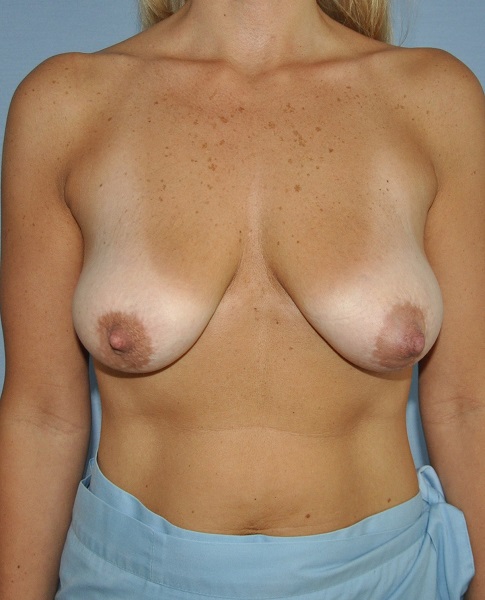
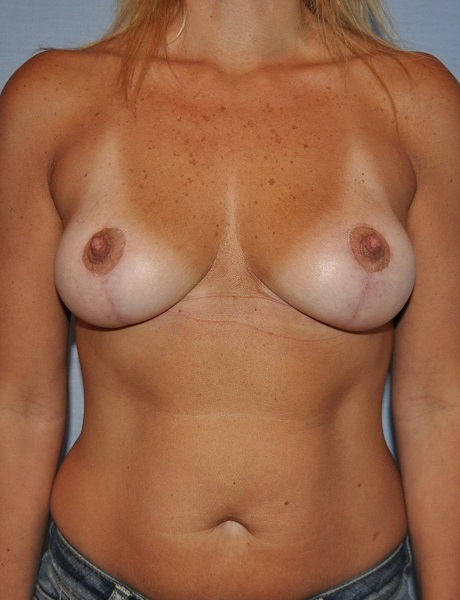
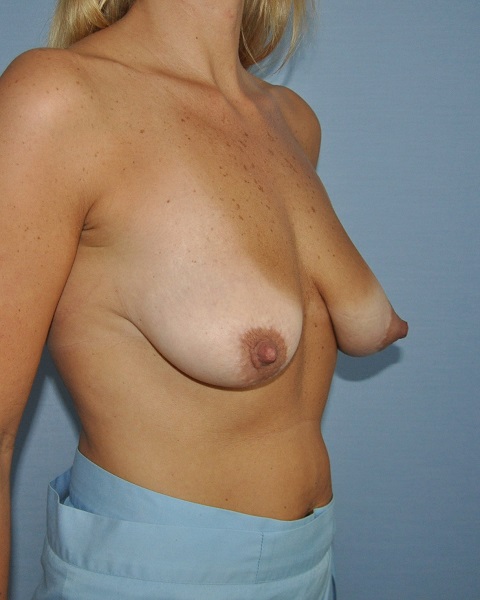
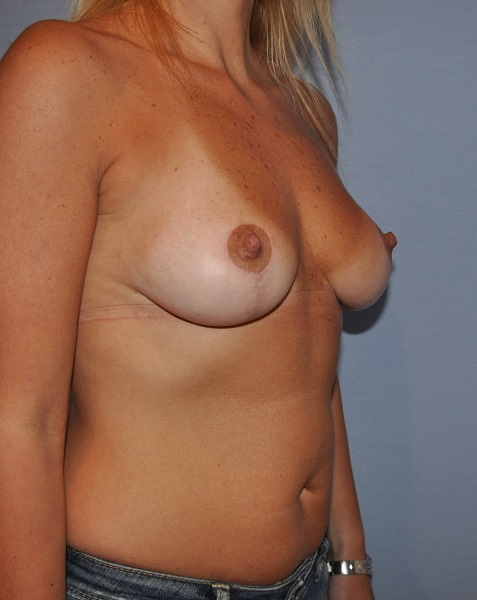
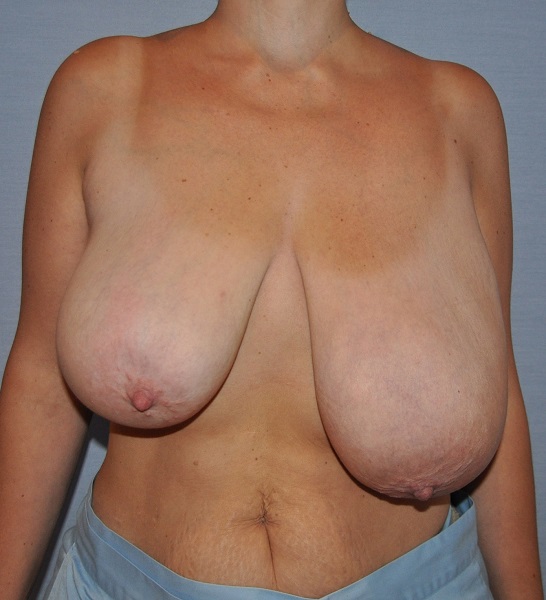
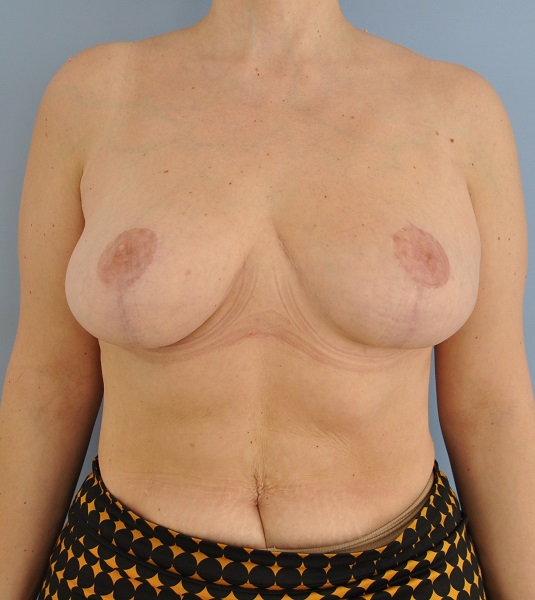
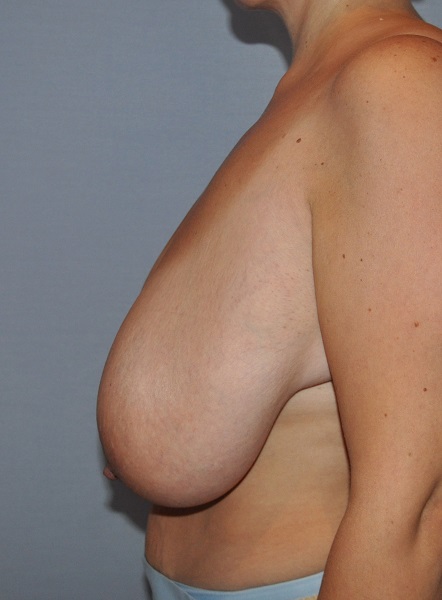
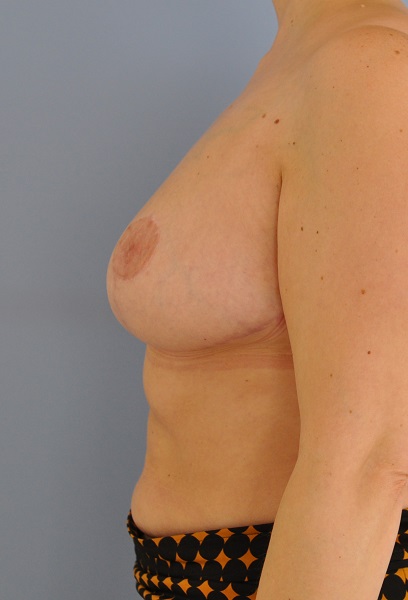
Detailed information
Breast lift and breast reduction surgery.
Breast lift (mastopexy) and breast reduction surgery are plastic surgery operations performed according to the same scheme (pattern). The goal of breast lift is to improve the form (appearance) while maintaining breast size. Breast reduction surgery involves improving the shape and appearance of the breasts while simultaneously reducing their volume (mass). Breast lift is a typical aesthetic plastic surgery procedure, while breast reduction surgery is a prime example of combining aesthetic and reconstructive plastic surgery.
The indication for plastic surgery is the so-called breast ptosis. Ptotic breasts are those whose nipple/areola complex, in a standing position, is at or below the inframammary fold. Patients expect an improvement in breast shape while maintaining their current bra „cup” size. Indications for breast reduction surgery are broader. Very large and sagging breasts cause many ailments. Among them, spinal pain, pain caused by the pressure of bra straps, and skin maceration in the inframammary fold area – where the skin becomes susceptible to various diseases (e.g., candidiasis) – come to the forefront. Often, the so-called mastodynia also occurs, meaning that the breasts are tender to the touch, or even spontaneously painful. From a psychological point of view, overly large and sagging breasts can be a source of embarrassment for a teenager as well as for an older woman. Unilateral breast hypertrophy with asymmetry further increases this embarrassment.
The presence of very large, sagging breasts is called gigantomastia and can occur in young women, adolescent girls, and older women. The cause of this deformity is a locally increased sensitivity of the mammary gland to female sex hormones. This is genetically determined. The goal of surgery for giant breasts is not only to improve their form but also to relieve the patient of the aforementioned ailments. Surgery may be indicated for a young woman (teenager) when the improvement in breast shape and overall body harmony allows for better emotional development and outweighs the risks of the procedure. Women in their 60s, and even 70s, will also appreciate the benefits of the procedure. It is then perceived as a release from a problem that has lasted throughout their lives.
From a surgical point of view, breast reduction surgery involves several elements. During the procedure, it is necessary to: 1. Reduce the circumference and move the nipple-areola complex upwards to the desired position. 2. Remove excess breast skin. 3. Reduce the mass of the gland and create a new breast mound from the remaining part. Achieving these goals requires surgery under general anesthesia (narcosis), which lasts from 2.5 to 4.0 hours. The duration of the operation depends on the size of the breasts – the greater the reduction, the longer the procedure. For a prolonged procedure under general anesthesia, the patient must be properly prepared. The general state of health must be good, and test results normal. In addition to blood tests, a breast ultrasound is required for the operation. If solid nodules are present in the breasts, they can be removed during the operation and sent for histopathological examination. After the procedure, the patient stays in the clinic overnight. Drains are left in the wounds, and a dressing is applied to the breasts. During the stay in the clinic, qualified nurses care for the patient, and physiotherapists perform procedures aimed at reducing the risk of complications and improving wound healing conditions (breathing exercises, early mobilization, magnetic field therapy). The next day, a hygienic dressing is applied, drains are removed, and a special bra is fitted to the patient, which aims to keep the breasts in the desired position and model them appropriately. Additionally, the bra protects the breasts from excessive movement and injuries. For the first week after the operation, a very calm lifestyle is recommended, without excessive physical exertion. Of course, you can move your arms in full range without bearing weight, but you should not lift a child, carry groceries, or clean. You can wash freely and prepare something to eat. During this 7-day period, the bra must be worn constantly, and the dressing must not get wet. Pain after this operation is not severe, and commonly available painkillers (Ibuprom, APAP) are sufficient to ensure comfort. After seven days, a follow-up examination is recommended, during which the nurse removes the dressing and some of the sutures. The doctor examines the wounds and checks if they are healing without complications. During this period, the wounds no longer require a dressing. The nurse applies special strips along the wounds, which sufficiently protect them from the external environment. The patient can now take a shower. For the next 7 days, one should not yet return to work or drive a car. A conservative lifestyle and limited physical exertion are still in effect. After two weeks, the wounds are usually healed, and the rest of the sutures can be removed. Along fresh scars, special strips are sometimes applied for a few more days. After this period, one can return to intellectual work and drive a car. Seat belts should be fastened. The pressure of the belt will not adversely affect the healing processes, but in the event of a collision, the risk of severe injuries is significantly reduced. For 2 weeks after the operation, wearing a special bra is still mandatory, as the scars are very delicate and do not have high tensile strength. Unavoidable consequences of the operation are swelling and bruising. Swelling increases 2-3 days after the procedure. So, the breasts are more swollen on the second day after the operation than immediately after the procedure. This is a normal phenomenon, and patients are warned about it. From the third day, the swelling subsides. After two weeks, the swelling is already significantly less, but still persists – even up to several months after the operation. Bruises disappear spontaneously after 7-21 days. Immediately after the procedure, the breasts are not bruised. Only on the second or third day does extravasated blood appear on the skin surface in the form of bruises. Special creams that accelerate the absorption of bruises can be purchased at the clinic. An unavoidable consequence of breast augmentation and reduction mammoplasty are scars. The scar is located around the nipple-areola complex, along the breast meridian, and sometimes also under the breast. Scars mature and change on average for about twelve months. Initially, for a few days after suture removal, small scabs may be present along the scar, which are easiest to remove by lubricating the scar with baby oil followed by a shower. Oiled scabs spontaneously separate from the scar under the influence of water. Do not pick at scabs, as this risks the scar in that area becoming wider and less aesthetic than intended. Initially, the scar is red, then pink, and only after many months does it fade and become less visible. At subsequent follow-up examinations, which are recommended every few months during the first year after the operation, the doctor informs the patient how to care for the scar to make it as inconspicuous as possible. Important recommendations include scar massage, using appropriate ointments, and avoiding ultraviolet rays (sunbathing and solarium). Hypertrophic scars are rare and are the result of impaired wound healing or individual patient predispositions. After breast reduction surgery, especially with very large breasts, postoperative sensory disturbances in the nipple-areola complex usually occur. Breast augmentation itself is not the cause of this discomfort. From experience, we know that women with gigantomastia have poor sensation in this area even before the operation. Often, the nipple-areola complex feels worse for only a few months, and then sensation slowly returns, although it never returns to the state before the operation. Breast augmentation rarely causes difficulties with breastfeeding, whereas breast reduction surgery usually leads to lactation disorders. Women with gigantomastia usually had problems with breastfeeding even before the operation, but the operation can exacerbate these problems. In addition to the unavoidable consequences of the operation, complications may occur. They are rare but can cause discomfort for the patient and the doctor in the perioperative period. Blood may accumulate in the wound – this is called a hematoma. This happens during the first postoperative day, when the patient is in the clinic. It manifests as pain, increased swelling, and breast asymmetry. This complication requires surgical intervention, which involves removing sutures, evacuating blood from the wound, achieving hemostasis (closing a bleeding vessel), and re-suturing the wound. This complication, when recognized and treated appropriately, does not affect the final outcome of the procedure. Swelling and bruising may persist a little longer. Infection after breast reduction surgery is rare, but it is a potential complication of any surgical procedure. Symptoms of infection appear a few days after the operation. The breast becomes swollen, painful, red, warmer than the other breast, the patient feels generally unwell, and fever may occur. Infection usually develops on the basis of a hematoma that was not evacuated in time or on the basis of so-called fat necrosis of the breast tissues. What is fat necrosis? Breast parenchyma consists of glandular tissue and fatty tissue. We distinguish glandular breasts – in which glandular tissue dominates; fatty breasts – in which fatty tissue dominates; and mixed breasts. Fatty tissue is poorly vascularized, and in fatty breasts, sometimes part of the fatty tissue does not survive the operation and undergoes necrosis. Part of the „dissolved” fat resulting from this is absorbed, which can cause a low-grade fever or fever, and part is evacuated externally through the surgical wound. If fat necrosis is recognized in time and the dissolved fat is evacuated from the wound during dressings, it does not threaten the development of infection. Infection develops on the basis of dead fat remaining in the wound. The most difficult complication to treat after breast reduction surgery is necrosis of the nipple-areola complex. This happens extremely rarely. A doctor with appropriate knowledge and skills usually does not encounter this complication. Many different surgical techniques are distinguished, thanks to which the nipple-areola complex is moved to a new desired location. Each of these techniques carries a certain risk of ischemia of the complex's tissues. The skillful selection of the appropriate method for a given patient helps to avoid this most severe complication after breast reduction surgery. A doctor performing such procedures should possess the knowledge and skills to reconstruct the nipple-areola complex should such a complication occur. The guarantee of this is the choice of a doctor with a specialization in plastic surgery and appropriate experience in this type of operation. Plastic surgery is a science and an art, and procedures are performed on the human body. So many variables influence the final shape of the breasts that it is not possible to predict this with mathematical precision. It is not possible to achieve ideal breast symmetry after reduction mammoplasty. Often, the course and length of scars on one breast and the other differ. This results from the asymmetry of the breasts before the operation in terms of the amount of glandular tissue, skin, and tissue structure. The removal of different amounts of skin and glandular tissue from one breast and the other entails differences in the direction and length of the scars.
Historically, the first breast reduction surgeries were performed in the interwar period. Since then, the surgical technique has undergone significant modifications. Initially, the problem was the transfer of the nipple-areola complex to a new desired location – this is an inseparable and necessary element of every breast reduction operation. Later, surgeons aimed to minimize ischemic complications in the form of fat and glandular necrosis, skin necrosis, and ischemia of the nipple-areola complex. Important modifications included shortening the scar line. Currently, the goal is to achieve increasingly better aesthetic results in terms of shape while preserving sensation and the ability to breastfeed. Nearly a hundred years of experience in breast reduction surgery have led to the development of relatively safe surgical techniques, thanks to which all aesthetic and reconstructive goals of the procedure can be achieved while minimizing the risk of complications. We currently have several surgical techniques to choose from, which should be known to the surgeon. The doctor skillfully adapts a specific type of operation to a given case. Every woman has different breasts, and a standard operation should not be performed on all patients.
The result of breast augmentation and reduction mammoplasty can be initially assessed after three months, and definitively after one year. Corrective procedures should not be performed before 1 year has passed since the primary operation. Scars should be allowed to fully mature and breasts to settle. Breast reduction surgery is an operation after which there is a very high percentage of satisfied patients. Women achieve a better breast shape and additionally get rid of ailments and symptoms associated with gigantomastia.